Corrective Jaw Surgery: What to Expect Before, During and After?
Corrective jaw surgery, also called orthognathic surgery, can improve more than the appearance of your smile. For people with significant bite problems or jaw misalignment, it may make chewing, speaking, breathing, and closing the lips more comfortable.
The process takes time. Most patients have orthodontic treatment before and after surgery, and recovery requires patience. Knowing what happens at each stage can make the experience feel more manageable.
How Corrective Jaw Surgery Works and Who May Need It?
Orthognathic surgery changes the position of the upper jaw, lower jaw, or both so the teeth and facial bones align more effectively. It is usually recommended when braces alone cannot correct the underlying jaw discrepancy.
A surgeon may recommend jaw surgery for concerns such as:
- A pronounced overbite, underbite, overjet, or open bite
- Noticeable jaw or facial asymmetry
- Difficulty chewing, biting, swallowing, or speaking
- Excessive tooth wear caused by an uneven bite
- Chronic strain on the jaw joints in some cases
- Airway narrowing or sleep-related breathing issues linked to jaw structure
Treatment is usually planned after facial growth is complete. This is often in the late teens for girls and late teens to early twenties for boys, although the right timing varies by person.
Your orthodontist and oral and maxillofacial surgeon work together to determine whether surgery is appropriate. Planning often includes dental impressions or digital scans, photographs, X-rays, and sometimes 3D imaging.
Potential Benefits: Bite Function, Breathing and Facial Balance
The main goal of corrective jaw surgery is to create a stable, functional bite. When the jaws fit together properly, patients may find it easier to chew food, bite into things, and maintain their oral health.
Other potential benefits include:
- Less uneven pressure on teeth and jaw joints
- Better ability to close the lips comfortably
- Improved facial balance or symmetry
- Reduced tooth wear from an uneven bite
- Improved airway space for some patients with jaw-related breathing concerns
The aesthetic changes can be meaningful, but they are part of a broader treatment plan focused on function and long-term stability. Results vary based on the type of jaw discrepancy, the surgical plan, orthodontic treatment, healing, and follow-up care.
Risks and Safety Considerations
Corrective jaw surgery is a well-established procedure, but it is still major surgery. Your surgeon should explain the benefits, alternatives, and risks in relation to your own diagnosis.
Possible general surgical risks include bleeding, infection, blood clots, and reactions to anesthesia. Procedure-specific risks can include temporary or permanent numbness or altered sensation, particularly in the lower lip and chin after lower-jaw surgery.
Some patients experience jaw or joint pain, damage to teeth, roots, or existing dental work, or difficulty opening the mouth during recovery.
There is also a chance of bite changes, partial relapse, or gradual shifting over time. In some cases, patients may need additional orthodontic treatment or, less commonly, another procedure.
Swelling, bruising, discomfort, fatigue, and difficulty eating are expected during early recovery. Choosing an experienced oral and maxillofacial surgeon and following postoperative instructions closely can help reduce avoidable complications.
Braces and Other Preparation Before Surgery
Before surgery, braces or clear orthodontic appliances are used to place the teeth in the correct position within each jaw. This may seem counterintuitive because the bite can look worse before surgery, but it allows the surgeon to move the jawbones into a position where the teeth will fit together properly afterward.
Pre-surgical orthodontics often lasts 12 to 18 months, though treatment length varies. Your care team may also use digital planning software, models, 3D scans, surgical splints, or custom guides to map out the jaw movements.
You will likely have several appointments with both the orthodontist and surgeon. Let them know about medications, smoking or vaping, medical conditions, and any history of sleep apnea or anesthesia problems. Smoking and nicotine use can interfere with bone healing, so your surgeon may require you to stop before and after surgery.
What Happens on Surgery Day?
Jaw surgery is performed in a hospital or surgical center under general anesthesia. You will be asleep throughout the procedure.
Most incisions are made inside the mouth, which means visible facial scars are uncommon. The surgeon carefully cuts and repositions the jawbone according to the treatment plan. Small titanium plates and screws are typically used to hold the bones in their new position. These usually remain in place unless they later cause a problem.
A surgical splint and elastics may be used to guide your bite and protect the repair. Depending on whether one or both jaws are treated, surgery often takes one to four hours. More complex cases can take longer.
The First Days in the Hospital
After surgery, you will wake up in a recovery area while staff monitor your breathing, blood pressure, pain, nausea, swelling, and bleeding. Most patients stay in the hospital for one to three days.
Early symptoms often include:
- Significant facial swelling
- Bruising
- Nasal congestion, especially after upper-jaw surgery
- A sore throat from the breathing tube
- Numbness or tingling in the lips, chin, cheeks, or gums
- Difficulty speaking and drinking at first
Your care team will show you how to take liquids, clean your mouth, use prescribed rinses, and manage pain medication. They will also give you specific guidance about elastics, splints, activity, and follow-up visits.
Healing Timeline and Long-Term Results
Initial bone healing usually takes about six weeks, while more complete healing may take roughly 10 to 12 weeks. Swelling improves steadily, but minor swelling can linger for several months. Numbness may resolve gradually over weeks or months, and sometimes it can be permanent.
Most people need time away from school or work, often two to four weeks depending on the procedure and the nature of their job. Strenuous exercise is usually restricted during the early healing period.
Your orthodontist commonly resumes detailed brace adjustments after the surgeon confirms that healing is progressing well. Braces may remain in place for several months after surgery, and retainers are used after braces come off to help maintain the result.
Eating, Cleaning and Daily Life During Recovery
Your surgeon’s instructions should always come first because diet recommendations vary by procedure. Many patients begin with a liquid diet, then move to pureed or very soft foods before gradually returning to foods that require chewing.
Focus on hydration and adequate protein and calories, even if eating feels inconvenient. Small, frequent meals can be easier than large meals. Avoid hard, crunchy, sticky, or chewy foods until your surgical team clears them.
Good oral hygiene matters. Brush gently with a soft toothbrush when instructed, use prescribed mouth rinses, and keep follow-up appointments. Avoid smoking, vaping, alcohol if it conflicts with medication or healing instructions, and any activity that could lead to facial injury.
When to Call Your Oral Surgeon?
Contact your dental surgeon promptly if you develop a fever of 100.4°F (38°C) or higher, worsening pain that is not controlled by medication, pus, a foul taste or odor, increasing redness, rapidly worsening swelling, or persistent bleeding.
Seek urgent care for trouble breathing, severe difficulty swallowing, dehydration, repeated vomiting, chest pain, or any symptom that feels severe or sudden. You should also contact your team if your bite changes unexpectedly or you cannot keep fluids down.
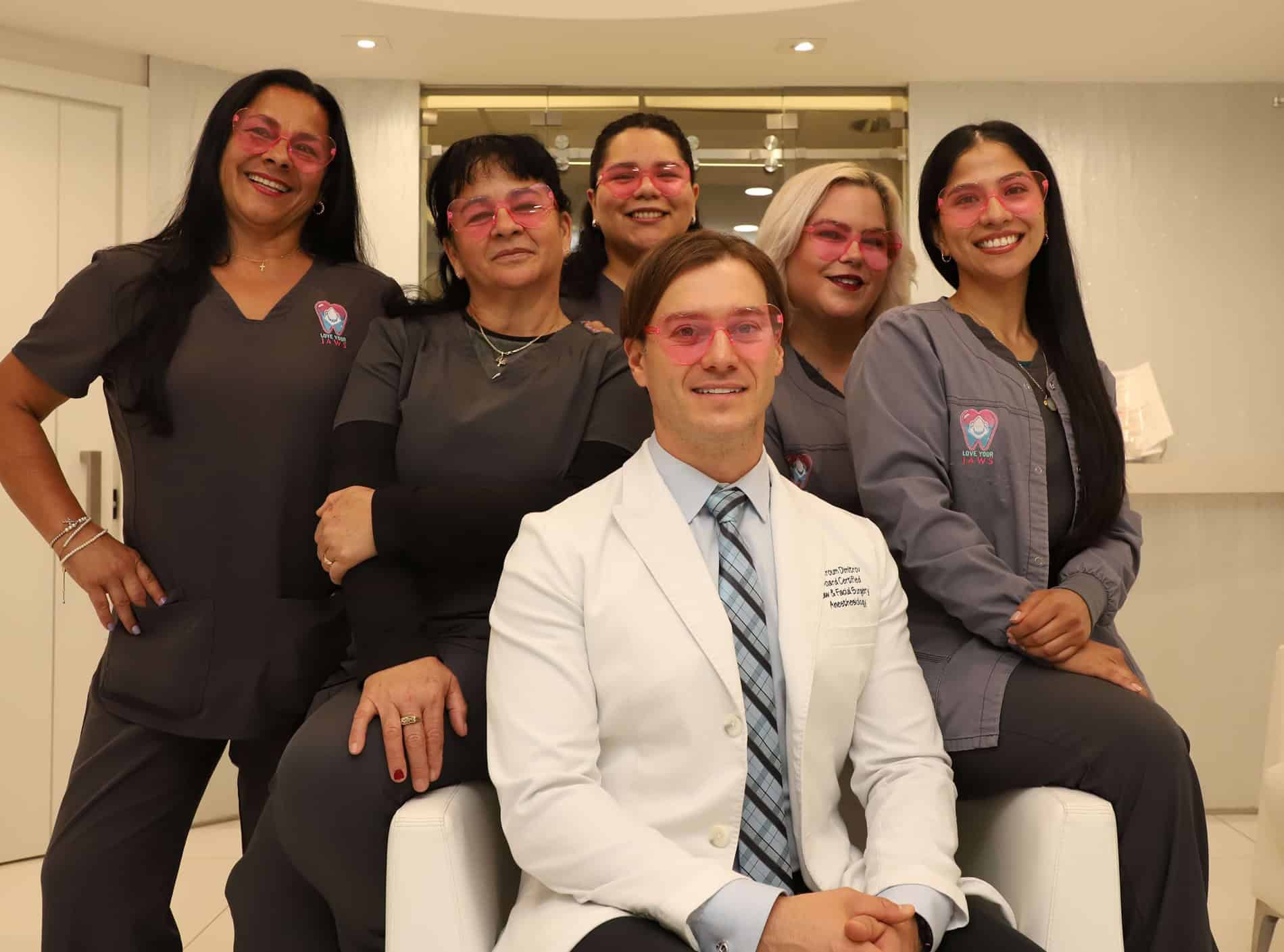
Choosing Love Your Jaws for corrective jaw surgery ensures your treatment is guided by Dr. Kroum Dimitrov, a dual board-certified maxillofacial surgeon with elite training in complex facial reconstruction.
Their oral surgery center utilizes state-of-the-art 3D virtual surgical planning (VSP) to model your procedure digitally beforehand, ensuring sub-millimeter precision when correcting bite misalignments and facial asymmetry.
This highly advanced approach minimizes operating times, reduces surgical trauma, and guarantees more predictable, life-changing cosmetic and functional results.
Furthermore, the clinic's dedicated "patient-first" care and expert sedation protocols ensure a safe, comfortable experience from your initial consultation through your final recovery.